A wedding can look beautiful and still feel flat for guests.
That usually happens when the day is planned around décor, photos, and formal moments, while the guest experience is treated as a small detail. Guests remember more than the flowers and table settings. They remember whether they felt welcomed, whether they had something enjoyable to do during quiet moments, and whether the celebration felt easy to join.
Interactive wedding experiences do not need to be loud, expensive, or complicated. The strongest ideas usually solve simple problems: guests waiting too long, people from different groups not knowing each other, unclear directions, long gaps between events, or a reception that looks polished but feels passive.
A better approach is to design the wedding day as a guest journey. From the invitation to the final dance, every detail should help guests understand the mood, move through the day comfortably, and participate in natural ways.
Start the Guest Experience Before the Wedding Day
The guest experience begins long before anyone arrives at the venue.
Save the dates, invitations, RSVP cards, wedding websites, and pre-wedding messages shape expectations. They tell guests what kind of celebration they are attending, what to wear, when to arrive, and how formal or relaxed the day will feel.
This is where many couples miss an easy opportunity. A beautiful invitation sets the tone visually, but the wording and details matter just as much. Guests should not have to guess the dress code, transportation plan, parking situation, ceremony timing, or whether children are invited.
Helpful pre-wedding details can include:
- A clear timeline for the ceremony, cocktail hour, dinner, and reception
- Dress code guidance that feels specific, not vague
- Transportation and parking instructions
- Venue notes, especially for outdoor, destination, or multi-location weddings
- RSVP questions that help with meal choices, allergies, song requests, or shuttle planning
- A short note about any interactive guest moments, such as a guestbook table, photo area, or late-night activity
This does more than reduce questions. It helps guests arrive relaxed. When people know what to expect, they are more likely to enjoy the day from the beginning.
Make Arrival Feel Clear and Welcoming
The first few minutes at a wedding shape the guest’s mood.
If guests arrive and do not know where to go, where to place cards, where to sign the guestbook, or whether they should sit immediately, the experience starts with confusion. That confusion is easy to avoid with simple visual cues.
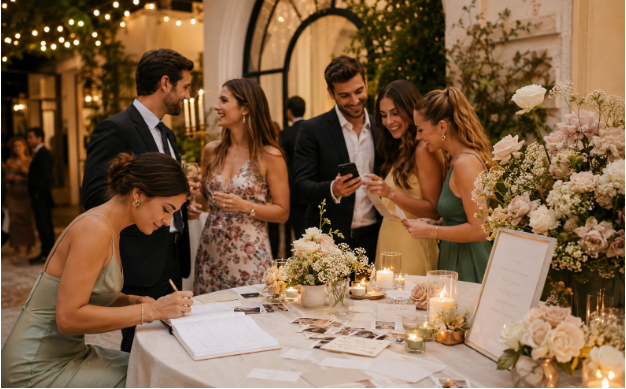
A strong arrival area usually includes a welcome sign, a clear ceremony entrance, a card box, a guestbook or message table, and someone available to point guests in the right direction. The goal is not to over-decorate the entrance. The goal is to make guests feel expected.
Wedding stationery and signage can do a lot of quiet work here. A welcome sign confirms guests are in the right place. A seating chart helps them move confidently into the reception. Table numbers, menus, and place cards make the dinner experience feel organized. Small details create a sense of care.
For a more interactive arrival, couples can add a simple guest message station. This might be a traditional guestbook, advice cards, date-night idea cards, a Polaroid guestbook, or a memory note table. The activity should be easy to understand in a few seconds.
The best arrival experiences are clear, warm, and low-pressure.
Fix the Most Awkward Part: Waiting Time
Most wedding guest experience problems happen during waiting time.
This includes the gap between the ceremony and reception, cocktail hour, the period while the couple takes photos, or the quiet stretch before dinner starts. Guests are dressed up, excited, and ready to celebrate, but they may not know what to do yet.
This is where interactive details have the biggest impact.
A good waiting-time plan gives guests something light and social to do without making the day feel over-scheduled. The activity should be easy to join, easy to leave, and suitable for different ages.
Strong options include:
- A welcome drink station
- A small tasting table
- A Polaroid guestbook
- A live musician or acoustic set
- A flower bar
- A champagne wall
- Lawn games for outdoor weddings
- A message card station
- A photo or video area
- A lounge corner where guests can relax and talk
The key is to place these activities where guests naturally gather. Near the bar, lounge area, reception entrance, or guestbook table usually works better than a hidden corner.
Couples should also think about timing. A photo or video station works well during cocktail hour and early reception because guests still look fresh, the energy is building, and people are looking for something to do before dinner or dancing.
Give Guests Something Easy to Do Together
Many wedding guests do not know each other.
Family members, college friends, coworkers, and plus-ones may all be in the same room with very little shared context. A good interactive experience gives them an easy reason to talk, laugh, or participate together.
This does not mean forcing games on everyone. Some guests love games. Others avoid anything that feels too public. The safest interactive ideas are low-pressure and self-guided.
Good examples include:
- Table conversation cards
- “Leave a memory” cards
- A photo scavenger hunt
- A Polaroid wall
- A guestbook with prompts
- Audio messages for the couple
- A dessert or cocktail tasting station
- A short activity near the bar or lounge area
The best interactive wedding ideas feel optional. Guests should be able to participate without being pulled onto a stage or interrupted during dinner. When participation feels natural, more people join.
A simple prompt can make a big difference. Instead of a blank guestbook, ask guests to write their best marriage advice, favorite memory with the couple, or a song they want to hear later. Prompts remove the awkwardness and make the responses more personal.
Create One Shareable Photo or Video Moment
Every modern wedding needs at least one intentional photo or video moment for guests.
This does not mean turning the reception into a content production set. It means creating one attractive, easy-to-use area where guests can capture something fun without disrupting the celebration.
A wedding photo area works best when it feels connected to the overall design. The backdrop, lighting, signage, props, and digital overlays should match the wedding colors, stationery, and venue style. If the invitations are elegant and minimal, the photo setup should feel the same. If the wedding is bold, colorful, or modern, the photo moment can carry that energy.
For couples who want a more energetic reception, a photo booth-style setup such as a 360 wedding video station gives guests a simple way to create short, shareable clips during the party without pulling attention away from the couple.
Placement matters. A photo or video area should be visible enough for guests to notice, but not so central that it blocks traffic. Near the dance floor, bar, or lounge area often works well. Clear instructions also help. Guests should understand what to do without needing a long explanation.
For the best results, couples can prepare:
- A clean backdrop that matches the wedding style
- Soft, flattering lighting
- Simple instructions
- A small sign with sharing details
- A few props that fit the theme
- Enough space for groups
- A nearby host or attendant for busier receptions
The goal is to help guests create memories they want to keep and share.
Match Interactive Details to the Wedding Style
Interactive wedding ideas work best when they fit the couple’s style.
A black-tie ballroom wedding does not need the same activities as a garden wedding, beach wedding, or modern city reception. The idea should feel like part of the event, not something randomly added at the end.
For an elegant ballroom wedding, consider a live portrait artist, champagne tower, formal photo backdrop, string quartet, or handwritten message cards.
For an outdoor garden wedding, lawn games, a flower bar, Polaroid guestbook, watercolor signage, or a relaxed cocktail station can feel natural.
For a modern city wedding, a 360 video station, neon sign, editorial-style photo area, cocktail wall, or digital guestbook may fit better.
For a destination wedding, welcome bags, local tasting stations, travel-themed guestbooks, and regional music can help guests feel connected to the location.
For a small intimate wedding, handwritten notes, memory tables, personal menus, and conversation prompts often create more impact than large entertainment features.
The most important question is simple: does this activity match the atmosphere the couple wants?
If the answer is no, skip it.
Avoid Overloading the Reception
A wedding reception does not need ten interactive features.
Too many activities can make the event feel cluttered. Guests may feel pulled in too many directions, and the couple may spend money on details that do not get used.
A better plan is to choose two or three strong guest experience moments:
- One arrival or welcome detail
- One waiting-time activity
- One photo, video, or memory-making moment
This is usually enough.
For example, a couple could use a welcome sign and guestbook table at arrival, a cocktail hour tasting station while photos are being taken, and a video booth moment near the dance floor later in the evening. That gives the wedding structure without making it feel busy.
Couples should also avoid activities that require too much explanation. If guests need several steps, an app download, or staff support to understand the activity, it may not work well during a fast-moving reception.
The best ideas are obvious, accessible, and easy to enjoy.
Think About Flow, Space, and Timing
Even a great guest experience idea can fail if it is placed in the wrong location.
Flow matters. Guests should be able to move from ceremony to cocktail hour, from cocktail hour to dinner, and from dinner to dancing without bottlenecks. Interactive stations should support that movement.
Before choosing activities, couples should look at the venue layout and ask:
- Where will guests naturally gather?
- Where will they wait?
- Where is the bar?
- Where is the dance floor?
- Where can a photo or guestbook area fit without blocking traffic?
- Where is the best lighting?
- Where are the power outlets?
- Will older guests have somewhere comfortable to sit?
- Can guests participate without missing important moments?
Timing matters too. A guestbook table works best early. A video station may work better after dinner when energy is higher. Lawn games are better before sunset. A late-night snack station works best when dancing has already started.
Good guest experience planning is practical. It should make the day easier, not harder.
Make the Experience Personal
Personal details are what make a wedding feel memorable.
Interactive elements become stronger when they connect to the couple’s story. A generic guestbook is fine. A guestbook with prompts about the couple’s first date, favorite trip, or future plans feels more meaningful.
Couples can personalize the guest experience through:
- Signature drinks based on places or memories
- Table names inspired by travel, music, or shared interests
- A memory wall with family photos
- Advice cards with custom prompts
- A photo area styled around the wedding theme
- A playlist request line on the RSVP card
- A guestbook question that reflects the couple’s personality
Personalization should feel intentional. It does not need to be expensive. A thoughtful prompt, well-placed sign, or meaningful display can create more connection than a large feature with no emotional link.
Quick Checklist for a Better Wedding Guest Experience
Before finalizing the reception plan, couples can use this checklist:
- Do guests know what to expect before the wedding day?
- Are the invitation, website, and RSVP details clear?
- Is the arrival area easy to understand?
- Is there a clear place for cards, gifts, and guest messages?
- Is there something for guests to do during cocktail hour or waiting time?
- Are interactive activities easy to join without pressure?
- Is there one strong photo or video moment?
- Does every activity match the wedding style?
- Are signs and instructions simple?
- Is the venue flow comfortable?
- Are older guests and children considered?
- Are there enough seating areas?
- Are activities placed near natural gathering points?
- Is the reception plan focused, not overloaded?
If most of these questions have clear answers, the guest experience is already stronger than most weddings.
Final Thoughts
A memorable wedding guest experience is built through small, thoughtful decisions.
The invitation sets the tone. The signage guides the day. The arrival area makes people feel welcome. The cocktail hour gives guests something to do. The reception creates moments to connect, laugh, take photos, and celebrate.
Couples do not need to add every trend. They need to understand where guests may feel confused, bored, or disconnected, then solve those moments with clear, enjoyable details.
The best interactive weddings feel effortless. Guests know where to go, what to do, and how to join the celebration in a way that feels natural. That is what turns a beautiful wedding into a day people actually remember.